Artwork of the month - Armand Rassenfosse
October 2024
Armand Rassenfosse, prints and posters
Armand Rassenfosse (Liège, 1862-1934) was one of the great Walloon artists of international renown in the late 19th and early 20th centuries.
A renowned draughtsman, engraver, painter, book illustrator and poster artist, he began and continued his training as a self-taught artist, working alongside artists from Liège who attended the Académie des Beaux-Arts and gathered around the figure of Adrien de Witte (1850-1935). His meeting with Félicien Rops (1833-1898) in Paris in 1888 was to prove decisive. As well as introducing him to the Parisian art world, the two artists became friends and collaborated on a number of research projects on engraving techniques.
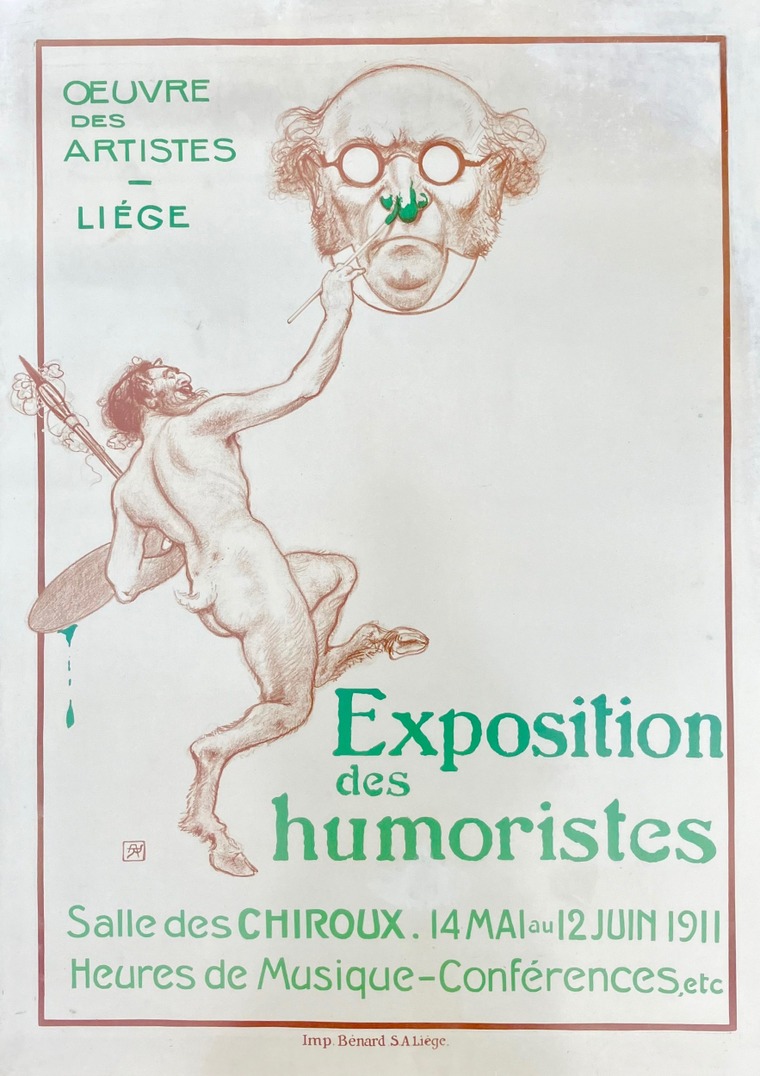
Although he was destined to take over the family business - an objets d'art shop in the centre of Liège - he left it to take a job with his friend Auguste Bénard (1854-1907), who had been running a printing and lithography workshop since 1887. There, Rassenfosse composed numerous advertisements, letterheads and personalised signs. He perfected his mastery of lithography and excelled in the field of advertising posters alongside other Liege artists such as Auguste Donnay (1862-1921) and Emile Berchmans (1867-1947), who produced several posters for the printing works. These were exhibited extensively and contributed to the international reputation of the Bénard printing works. Rassenfosse became artistic and technical director and administrator of the printing works after the death of its founder in 1907. He also specialised in illustrated books, thanks to the close relationships he forged with leading Parisian publishers. In 1899, he illustrated a posthumous edition of the ‘Fleurs du mal’ by Charles Baudelaire (1821-1867), as well as short stories by Jules Barbey d'Aurevilly (1808-1889) in 1907 and 1925.
The art of the ex-libris
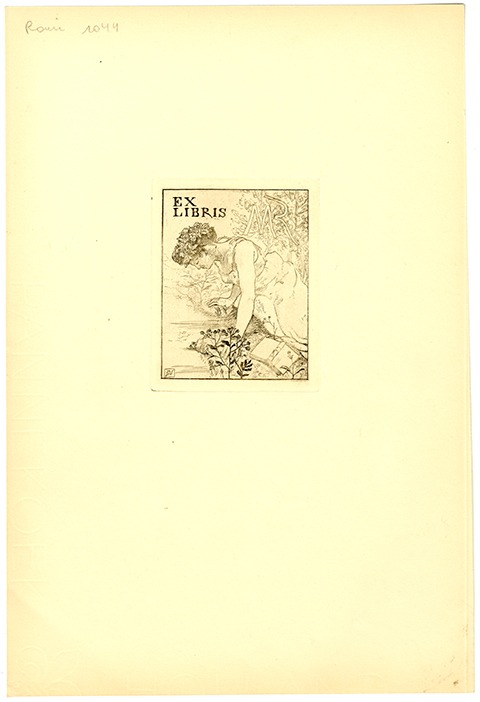
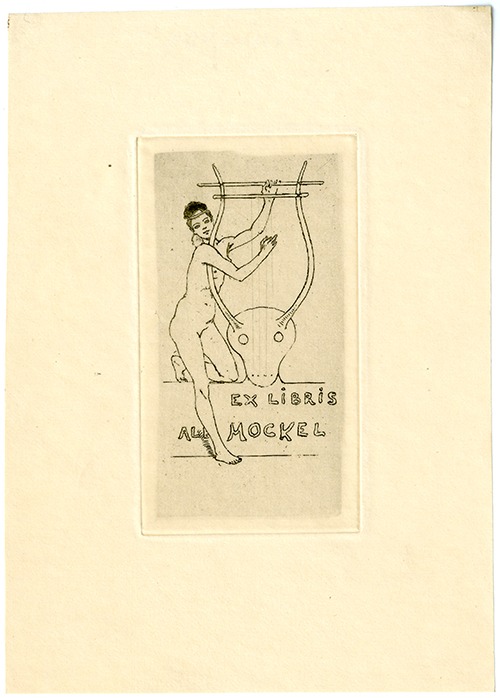
An ex-libris is a miniature print affixed to a book to identify its owner. Bibliophiles became fascinated with this form of artistic expression in Belgium in the second half of the 19th century. It corresponded to a revival of literature, but also to developments in modern reproduction techniques. As a result, bookplates became more accessible to enthusiasts because they were less expensive. In his miniature engravings, Rassenfosse was constrained by the size of the book. This art form therefore required skill and technical mastery. Armand Rassenfosse's output includes around a hundred pieces that bear witness to his mastery and his ability to evoke a personality, an atmosphere, in just a few strokes.
Rassenfosse was honoured this summer in the City of Liège's museums: at La Boverie, the Galerie des Beaux-Arts and the Fonds Patrimoniaux. The Fonds Patrimoniaux exhibition is still open until 16 November.
There will also be two special openings on Sunday 6 October and Saturday 16 November. Between 11am and 5pm, prints based on Rassenfosse's engravings will be made on the artist's original press, held in the Fonds Patrimoniaux.
Sandrine Vandecasteele
Curator / Fonds Patrimoniaux
Visual captions
Bookplate of Albert Mockel, 1892
Soft varnish, drypoint and aquatint on Japanese paper
82 x 45 mm
1050 / Fonds Patrimoniaux collection
Bookplate of Marie Rassenfosse, 1904
Etching on japan paper
79 x 61 mm
1044 / Fonds Patrimoniaux collection
Poster for the Exhibition of Humourists, 1911
Colour lithograph on paper, Bénard S. A.
85 x 62 cm
Fonds Patrimoniaux Collection